
Most solar panel underperformance stems from a single culprit: accumulated dirt, debris, and shading that blocks sunlight from reaching your cells. Before you assume a major defect or call in costly repairs, check your panels for visible buildup or shadows cast by nearby trees, buildings, or even bird droppings. A simple cleaning or seasonal trimming often restores output by 15 to 25 percent.
If your monitoring system shows a sudden drop in production, start with the easiest diagnostics. Inspect for physical obstructions, verify that your inverter displays normal operation lights, and review recent weather events that may have introduced dust or pollen. These quick checks solve the majority of reported issues without professional intervention.
That said, solar technology involves high-voltage DC systems. Never attempt repairs to wiring, inverters, or mounting hardware yourself. If cleaning and visual inspection don’t resolve the problem, or if you notice burn marks, unusual odors, or error codes on your inverter, stop and contact a certified installer immediately.
This guide walks you through systematic troubleshooting, from identifying symptoms and pinpointing root causes to step-by-step fixes you can safely perform. You’ll also learn prevention strategies that keep your system performing at peak capacity year after year. Whether you’re troubleshooting a weeks-old installation or maintaining a decade-old array, understanding common failure modes empowers you to protect your investment and maximize the clean energy your panels deliver to your home and the grid. Let’s start with the warning signs that something’s gone wrong.
Recognizing the Warning Signs: Is Your System Underperforming?
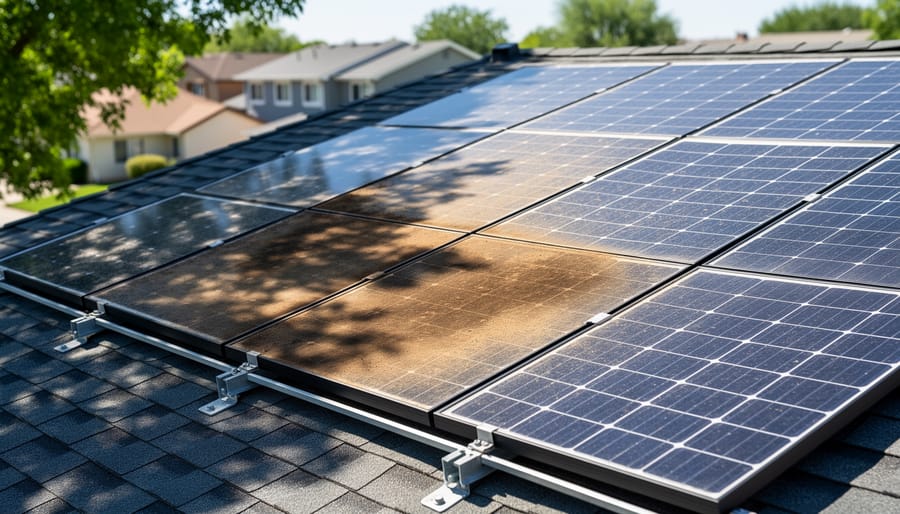
Your solar panels promised clean energy and lower bills, but something feels off. Maybe your electricity costs haven’t dropped as much as projected, or your monitoring app shows numbers that don’t match the installer’s estimates. Recognizing underperformance early can save you money and frustration, turning a nagging worry into actionable fixes.
Start with your energy production data. Compare your system’s actual output against the original performance projections your installer provided. Most monitoring systems track daily, monthly, and annual generation. If you’re consistently producing 15-20% less energy than expected for your location and system size, that’s a red flag worth investigating. Seasonal variations are normal, panels produce less in winter, but persistent underperformance across multiple months signals a problem.
Watch for these warning signs that your panels need attention:
- Energy output dropping significantly compared to previous months in the same season
- Yellowing or browning discoloration visible on panel surfaces
- Bubbling, peeling, or separation of the clear protective layer (delamination)
- Visible cracks or fracture lines across solar cells, even hairline ones
- Hot spots, areas noticeably warmer than surrounding sections when touched on a sunny day
- Frequent inverter error codes or shutdown messages
- Dramatic performance differences between individual panels in your array
Physical degradation often appears gradually. Discoloration typically starts at panel edges where moisture can seep in, creating rust-colored stains or yellowed areas that block sunlight from reaching cells. Delamination looks like air pockets or cloudy patches under the glass, compromising the panel’s ability to generate power. Microcracks are harder to spot without professional inspection, but they cause measurable output losses as they spread.
Your inverter is your system’s diagnostic tool. Modern inverters display error codes and performance data that reveal panel-level issues. Repeated fault messages, especially related to ground faults or string failures, suggest deeper problems. Some inverters track individual panel performance, if one consistently lags behind its neighbors, it’s likely struggling with degradation and failure modes common to poor-quality components.
Performance drops over time are expected, quality panels degrade about 0.5% annually, but accelerated decline exceeding 1-2% per year points to manufacturing defects or material failures. Document your system’s output history to catch these trends before they devastate your energy savings.
Root Causes: Why Poor-Quality Panels Fail

Material Compromises That Lead to Failure
When manufacturers cut corners on materials, the consequences show up in your energy bills and system lifespan. The silicon wafers that form a panel’s cells represent the biggest opportunity for cost-cutting. Low-grade polysilicon contains more impurities, which creates resistance hotspots and reduces conversion efficiency by 2-5% compared to premium-grade silicon. These impurities also accelerate degradation, causing annual performance drops of 1-2% instead of the 0.5% industry standard.
The backsheet, that white or black layer protecting the panel’s rear, suffers frequent compromise. Quality backsheets use fluoropolymer compounds that resist UV degradation for 25+ years. Budget alternatives substitute cheaper PET plastics that crack and yellow within 5-7 years, allowing moisture infiltration that corrodes electrical connections and delaminates layers.
Glass quality matters more than most buyers realize. Premium solar glass undergoes thermal tempering and anti-reflective coating processes that maximize light transmission while withstanding hail and thermal stress. Cheaper glass skips these treatments, transmitting 3-4% less light initially and developing microcracks from temperature cycling. Within a few years, these microcracks spread, creating entry points for water vapor.
Soldering quality determines electrical reliability. Proper soldering uses lead-free alloys applied at controlled temperatures with flux that prevents oxidation. Rushed production lines use excess flux, inadequate heating, or inconsistent application, creating weak joints that develop high resistance, generate heat, and eventually fail. A single broken solder connection can disable an entire string of cells.
Manufacturing Shortcuts and Quality Control Gaps
Corners cut during manufacturing create vulnerabilities that don’t appear until panels are already installed on your roof. When manufacturers prioritize speed and cost reduction over quality assurance, the consequences compound across every stage of production.
Rushed production timelines force workers to skip critical curing periods for encapsulant materials. Adhesives that should set for hours get half that time, creating weak bonds between layers. These rushed processes also mean fewer quality checkpoints, panels move from one station to the next without proper inspection intervals. A single compromised junction box or poorly laminated cell slips through, multiplying across an entire production run.
The absence of third-party testing represents perhaps the most significant gap. Legitimate manufacturers submit panels to independent laboratories for certification testing that simulates years of environmental stress in weeks. They test thermal cycling, humidity freeze cycles, mechanical load tolerance, and electrical safety. Manufacturers who skip this step rely solely on in-house testing, which lacks the rigor and objectivity of certified facilities. No independent verification means no accountability when panels fail prematurely.
Missing certifications tell you everything about a manufacturer’s priorities. IEC and UL standards exist because they catch defects before installation. When you see panels without these marks, you’re looking at products that either failed certification testing or never attempted it. Both scenarios point to the same outcome: systems vulnerable to the exact failures discussed throughout this article.
The production environment matters too. Facilities without controlled cleanroom conditions introduce contaminants during cell assembly. Dust particles, moisture, or chemical residues trapped between layers create degradation pathways that accelerate failure once panels face real-world conditions.
How to Fix Underperforming Solar Panels
Immediate Actions You Can Take
Before calling in an expert, you can safely address several common culprits that reduce solar panel performance. Start with a visual inspection from ground level, use binoculars if your panels are roof-mounted, looking for obvious debris like leaves, bird droppings, or dust buildup. Dirty panels can lose 15-25% of their output, and cleaning them might be all you need.
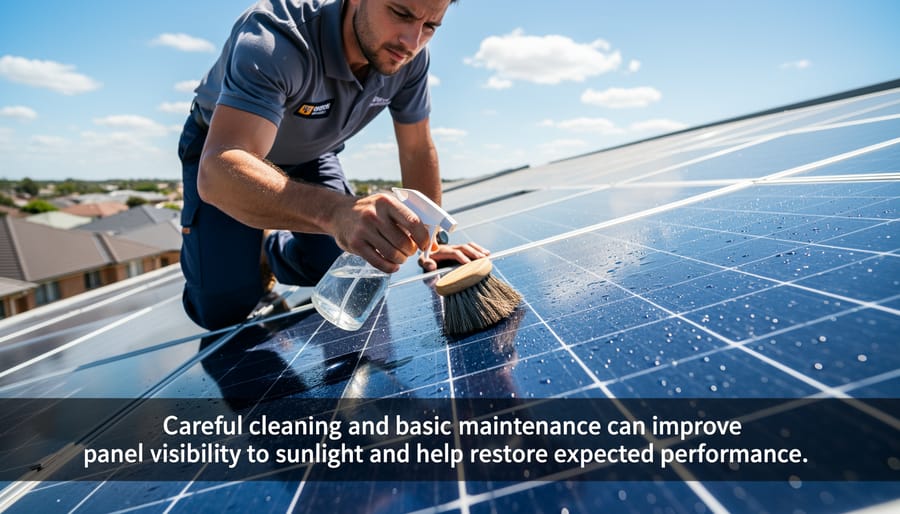
For cleaning, use a garden hose with a spray nozzle during early morning or late evening when panels are cool. Hot water on cold panels or cold water on hot panels risks thermal shock and cracking. If water alone does not work, use a soft brush with a mild, non-abrasive soap solution. Never use pressure washers, abrasive scrubbers, or harsh chemicals that damage protective coatings.
Next, check your monitoring system or inverter display for error codes or unusual patterns. Compare current output to historical data from similar weather conditions. A sudden drop suggests a specific failure, while gradual decline might indicate normal degradation or accumulating dirt. If you properly size solar batteries for your system, you can also track whether storage capacity has changed, which sometimes reveals panel underperformance rather than battery issues.
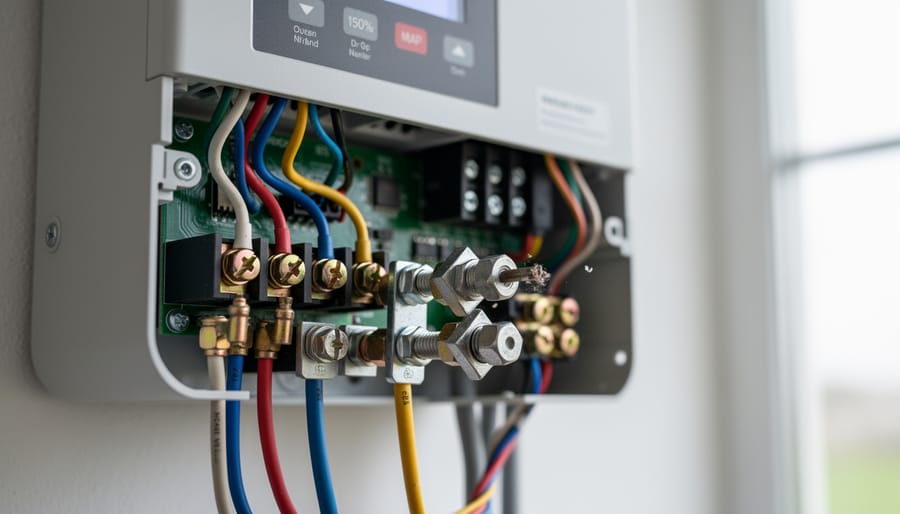
Inspect visible wiring and connections at the junction box for signs of corrosion, loose fittings, or animal damage. Do not open electrical boxes or touch wiring yourself. Simply document anything that looks unusual and photograph it for your installer. These simple checks resolve many performance complaints and establish a baseline before professional assessment.
When to Call in Professionals
Some solar panel problems demand specialized equipment and expertise that go beyond homeowner-level troubleshooting. Knowing when to call a professional protects both your safety and your investment.
Contact a certified solar technician immediately if you notice burnt smells, visible arcing or sparking, inverter errors that persist after basic resets, or significant power drops that cleaning doesn’t resolve. These symptoms often indicate electrical faults or internal panel failures that require diagnostic tools most homeowners don’t have access to.
Professional assessments typically include thermal imaging to detect hot spots invisible to the naked eye, electrical testing with specialized meters to measure voltage and current at multiple system points, and mechanical inspections for hidden structural damage. A thorough evaluation should provide you with documented findings, not just verbal observations.
Before the technician arrives, gather your system’s performance data from monitoring apps, noting specific dates when issues began. Take photos of any visible damage, discoloration, or error messages. Keep copies of your installation contract, warranty documents, and maintenance records organized in one place.
Request a detailed written report with photos documenting all identified problems. This documentation becomes essential if you need to file warranty claims with the manufacturer or installer. Ask the technician to explain whether issues stem from installation errors, manufacturing defects, or environmental factors, as this distinction often determines who covers repair costs.
Navigating Warranties and Replacement Options
When your panels fail, your warranty becomes your lifeline, but only if you understand what it actually covers. Most solar panels come with two warranties: a product warranty (typically 10-25 years) covering manufacturing defects, and a performance warranty (usually 25 years) guaranteeing a minimum power output, often 80-85% of original capacity. Here’s the catch: warranties don’t cover damage from poor installation, unauthorized modifications, or natural disasters unless explicitly stated.
Document everything from day one. Take photos of your system when installed, save all paperwork, and keep detailed records of performance data from your monitoring system. When problems arise, notify your installer first, they’re contractually responsible for workmanship and often manage warranty claims on your behalf. If they’re unresponsive or out of business, contact the panel manufacturer directly with your serial numbers and proof of purchase.
Beware coverage limitations. Warranties rarely cover labor costs for removal and reinstallation, shipping fees for replacement panels, or system downtime losses. Some manufacturers pro-rate coverage, meaning a five-year-old failed panel might only qualify for partial compensation. If your installer used cheap panels with weak warranties or the manufacturer has since folded, you may face expensive out-of-pocket replacements.
For systems beyond warranty or with unresponsive manufacturers, evaluate repair versus replacement economics. A single failed panel in a string can drag down the whole array’s performance, but replacing just that panel may create mismatched electrical characteristics. Sometimes strategic partial replacement works; other times, a full system upgrade makes more financial sense, especially given efficiency improvements in modern panels. Get quotes from multiple solar contractors, and consider this an opportunity to upgrade to tier-1 panels with robust warranties, essentially turning a problem into long-term prevention.
Preventing Problems: How to Choose Quality Solar Panels from the Start
Certifications and Standards That Matter
Solar panels displaying legitimate certifications aren’t just checking bureaucratic boxes, they’re proving they survived rigorous testing designed to expose exactly the failure modes we’ve been discussing. Understanding which certifications matter helps you separate marketing claims from verified performance.
IEC 61215 is the foundational standard for crystalline silicon panel durability. Panels must endure thermal cycling (200 temperature swings from -40°C to 85°C), humidity-freeze testing, mechanical load simulations, and UV exposure equivalent to decades of sunlight. Manufacturers can’t fake this, independent labs physically stress panels until weak materials, poor soldering, or inadequate encapsulation fail. Passing confirms the panel can handle real-world weathering.
IEC 61730 focuses on electrical safety, testing against fire hazards, shock risks, and insulation integrity. This matters because electrical failures create dangerous hot spots and potential fire risks in poor-quality panels.
UL certifications (particularly UL 1703 in North America) verify similar safety and durability benchmarks, often required by local building codes. The UL mark means the panel design underwent independent scrutiny, not just manufacturer self-testing.
Panels carrying all three certifications from accredited labs demonstrate manufacturers invested in quality control. Missing certifications, vague references to “industry standards,” or certifications from unknown bodies? Red flags suggesting corners were cut.
Questions to Ask Before You Buy
Before signing any contract, arm yourself with questions that separate quality installers from those cutting corners. Start with the fundamentals: “Which manufacturer makes these panels, and what tier are they?” A reputable installer will proudly name tier-1 brands and explain their selection criteria.
Press for specifics on warranties: “What’s covered under the product warranty versus the performance guarantee, and who honors it if you close your business?” Quality panels typically offer 25-year performance warranties guaranteeing 80-85% output. Confirm the installer provides separate workmanship warranties covering installation defects.
Ask about certifications: “Do these panels carry IEC 61215 and UL certification?” Non-certified panels are red flags. Request documentation proving compliance.
Dig into sourcing: “Where are these panels manufactured, and can I see the factory’s quality control certifications?” Transparency here signals confidence in supply chains.
Finally, address post-installation support: “How do you handle underperformance claims, and what’s your process for warranty work?” Vague answers or finger-pointing between manufacturer and installer suggest future headaches. Installers committed to quality welcome these questions, they’re protecting their reputation alongside your investment.
Understanding the True Cost of Cheap Panels
The cheapest panel might seem like a smart financial move, but it’s often the most expensive decision you’ll make. When you pay 30% less for bargain solar panels, you’re not just accepting lower efficiency, you’re risking complete system failure within years instead of decades.
Quality panels typically degrade at 0.5% annually, maintaining 90% capacity after 20 years. Poor-quality alternatives can lose 1-2% yearly, dropping below 80% capacity within a decade. That difference isn’t marginal, it’s the gap between a system that pays for itself and one that becomes a liability.
The math gets worse when failures occur. Replacing a failed budget panel after five years means paying for removal, disposal, new equipment, and reinstallation. You’ll spend more than the original savings, plus you’ve lost years of energy production. Meanwhile, e-waste from premature replacements contradicts the environmental purpose of going solar.
Quality panels come with robust 25-year performance warranties because manufacturers stand behind their work. Cheap panels often limit coverage to 10 years or include loopholes that void protection. When problems emerge, you’re on your own.
Investing in proven quality isn’t paying extra, it’s refusing to pay twice.
Common Questions About Solar Panel Quality and Problems
What’s a normal degradation rate for solar panels?
Quality panels degrade about 0.5% per year, retaining roughly 90% of their capacity after 20 years. Poor-quality panels can degrade at 1-3% annually, losing significant output within a decade and failing to meet warranty promises.
How can I tell if my panels are counterfeit?
Check for legitimate serial numbers that verify on the manufacturer’s website, proper certification labels (IEC, UL), and consistent branding. Counterfeit panels often have misspelled labels, missing serial numbers, or packaging that doesn’t match official manufacturer materials.
Are all budget solar panels poor quality?
Not necessarily, some reputable manufacturers offer affordable panels that meet certification standards and carry solid warranties. The red flag isn’t low price alone but the combination of rock-bottom pricing, unknown brands, weak warranties, and missing certifications.
What should I do if my installer used substandard panels?
Document the issues with photos and performance data, then contact your installer immediately to invoke warranty terms. If they’re unresponsive, escalate to the panel manufacturer directly and consider filing complaints with consumer protection agencies or your state’s contractor licensing board.
Understanding these fundamentals helps you make informed decisions that align with broader sustainability goals. Quality solar infrastructure doesn’t just protect your investment, it advances renewable energy adoption and supports climate action. When you choose certified panels and hold installers accountable, you’re contributing to the reliability of solar technology that communities worldwide depend on for cleaner energy futures.
The renewable energy sector continues evolving, with green energy updates shaping policy frameworks and manufacturing standards that protect consumers. These improvements matter because every failed panel creates waste and erodes public trust in solutions we need to scale rapidly. Similarly, mechanisms like carbon markets incentivize quality renewable infrastructure by rewarding verifiable carbon reduction, benefits that only materialize when solar systems perform as promised over their full lifespan.
The Bigger Picture: Quality Solar Panels and Climate Justice
When you choose a quality solar panel, you’re not just buying a product, you’re casting a vote for a sustainable energy system that can actually deliver on its climate promises. Poor-quality panels that fail within five years create a cascade of problems that extend far beyond your roof. Each premature failure generates electronic waste, requires resource-intensive manufacturing replacements, and erodes public confidence in renewable technology precisely when we need widespread adoption most. Communities that invest in unreliable systems face financial losses that discourage neighbors from making the switch, creating barriers to the collective action climate justice demands.
The ripple effects matter enormously. When solar systems perform as promised over their 25-year lifespan, they demonstrate that clean energy works, not just for early adopters with capital to absorb failures, but for families, schools, and community centers making their first renewable investment. Quality panels extend energy independence to underserved areas where industrial power generation has historically concentrated pollution and high costs. Failed systems become cautionary tales that slow this transition.
Your purchasing decision shapes market dynamics. Supporting manufacturers who prioritize durability over profit margins signals that consumers won’t accept planned obsolescence in climate solutions. This collective pressure strengthens the entire renewable sector, making quality the baseline rather than the premium option and ensuring solar energy delivers genuine, lasting environmental benefits to everyone.
Solar energy remains one of our most powerful tools for building a sustainable future, but the panels themselves must be built to last. Throughout this guide, you’ve learned to recognize the warning signs of poor-quality systems, understand the root causes behind failures, and take decisive action when problems emerge. These aren’t just technical skills, they’re acts of climate stewardship that protect your investment and strengthen the renewable energy movement.
The knowledge you’ve gained here extends beyond your own rooftop. When you share what you’ve learned with neighbors considering solar, when you ask installers tough questions about panel quality, when you hold manufacturers accountable through warranty claims, you’re helping build trust in renewable technology. Every quality solar installation that performs reliably for decades makes the next installation easier to justify, advancing energy access and climate justice in tangible ways.
Stay connected with Mining the Sun as you continue your renewable energy journey. Whether you’re troubleshooting an existing system or planning your next upgrade, we’re here with evidence-based guidance that puts environmental responsibility first. Together, we can ensure solar energy delivers on its promise, not just for individual households, but for communities working toward a cleaner, more equitable energy future.