
Renewable energy has won the cost battle against fossil fuels in most markets worldwide, with solar and wind now cheaper to build and operate than new coal or gas plants in over 90% of regions. This shift isn’t marginal. Utility-scale solar costs have plummeted more than 80% since 2010, while onshore wind has dropped roughly 70%, making renewables the most economical choice for new electricity generation. For homeowners, businesses, and policymakers evaluating energy investments in 2026, the financial case for renewables is no longer about environmental sacrifice, it’s about economic advantage.
But the comparison isn’t always straightforward. Fossil fuels still hold cost advantages in certain contexts, particularly where existing infrastructure is already paid off or where energy storage requirements inflate renewable system costs. Understanding the true price difference requires looking beyond sticker numbers to include fuel expenses, maintenance, environmental externalities, and long-term grid resilience. The cheapest option today may not be the smartest investment tomorrow.
This analysis breaks down the real costs across multiple dimensions: upfront capital, operating expenses, lifespan economics, and hidden costs that rarely appear on invoices but shape our climate future. Whether you’re weighing rooftop solar against grid electricity, advising on corporate energy strategy, or advocating for policy change, you need clarity on where each energy source stands financially. The numbers tell a compelling story, one where clean energy economics align with climate action more powerfully than ever before.
Energy Costs at a Glance: Fossil Fuels vs. Renewables in 2026
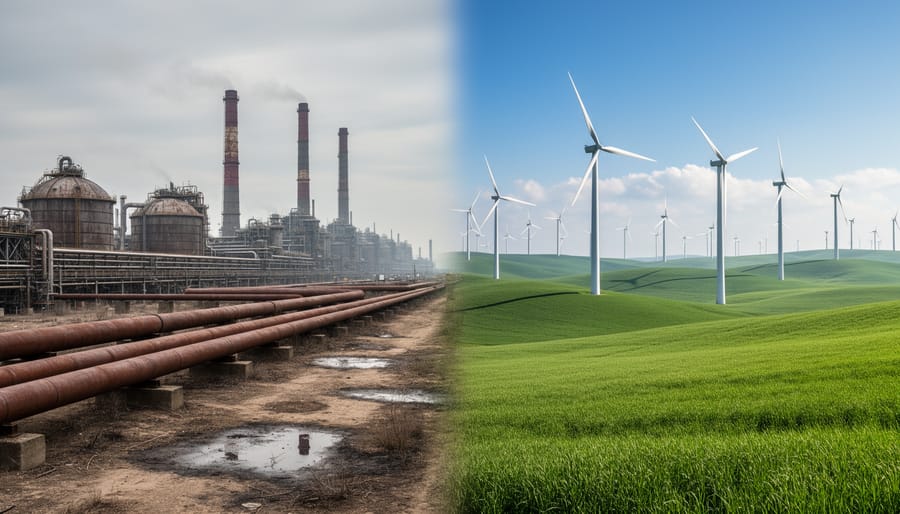
The financial landscape of energy has fundamentally shifted. As of 2026, renewable energy sources like solar and wind compete directly with, and often undercut, fossil fuels on pure economics. The numbers tell a compelling story that challenges decades of conventional wisdom about energy costs.
According to recent LCOE ranges from Lazard utility-scale solar photovoltaic systems now deliver electricity at $24-$96 per megawatt-hour (MWh), while onshore wind ranges from $24-$75 per MWh. Compare this to coal at $68-$166 per MWh and natural gas combined cycle plants at $39-$101 per MWh. The cost advantage for renewables becomes even clearer when accounting for the full lifecycle of each technology.
| Energy Source | LCOE Range ($/MWh) | Upfront Costs | Operating Costs | Cost Trajectory |
|---|---|---|---|---|
| Coal | $68-$166 | Moderate | High (fuel, maintenance) | Rising |
| Natural Gas | $39-$101 | Lower | Moderate-High (fuel dependent) | Volatile |
| Solar PV | $24-$96 | Higher | Very Low (no fuel) | Declining |
| Onshore Wind | $24-$75 | Higher | Low (no fuel) | Declining |
| Hydroelectric | $28-$126 | Very High | Low | Stable |
Installation costs present an interesting trade-off. Renewable projects typically require larger upfront investments, solar installations might cost $800-$1,200 per kilowatt, while wind turbines run $1,300-$2,200 per kilowatt. However, once operational, these systems incur minimal fuel costs and lower maintenance expenses compared to fossil fuel plants that continuously purchase coal, gas, or oil. This fundamental difference means renewables become cheaper over their 25-30 year lifespans, while fossil fuel costs remain tied to fluctuating commodity markets and ongoing fuel purchases.
Understanding the Energy Options: What Each Source Brings to the Table
Fossil Fuels: The Traditional Energy Foundation
Fossil fuels, coal, natural gas, and oil, have powered the modern world for over a century. These carbon-based energy sources work by burning ancient organic matter to generate heat, which typically drives turbines to produce electricity. Coal plants have historically offered the cheapest upfront costs, natural gas provides flexible power that can ramp up quickly to meet demand, and oil-based generation fills niche roles in remote locations and backup systems.
This trio dominated global energy markets because the infrastructure was already built, the technology was proven, and fuel was abundant. For decades, their economic advantage seemed unshakeable. Utilities knew exactly how much power they’d get per ton of coal or cubic meter of gas, and financial models were straightforward.
Today, that economic landscape has shifted dramatically. While fossil fuel plants still generate roughly 60% of global electricity, their cost advantage has evaporated in most markets. New coal plants now represent some of the most expensive power you can build, and natural gas prices swing wildly based on geopolitical tensions and supply disruptions. The foundation that seemed permanent is cracking under pressure from cleaner, increasingly cheaper alternatives.
Renewable Energy: The Clean Alternative
Renewable energy harnesses power from sources that naturally replenish themselves, sunlight, wind, flowing water, and heat from the earth. Unlike fossil fuels that require continuous extraction and combustion, these technologies convert ambient energy into electricity with zero fuel costs and minimal emissions once operational.
Solar photovoltaic panels transform sunlight directly into electricity, scaling from rooftop installations to utility-scale solar farms. Wind turbines capture kinetic energy from air movement, now generating power at costs below three cents per kilowatt-hour in prime locations. Hydroelectric facilities use water flow to spin turbines, providing both steady power and energy storage capabilities. Emerging sources like geothermal tap underground heat, while biomass converts organic waste into usable energy.
What makes renewables transformative is their plummeting cost trajectory. Solar panel prices have dropped 90% since 2010, and wind turbine efficiency continues climbing while installation costs fall. This economic shift democratizes energy access, enabling communities historically burdened by fossil fuel pollution to generate clean power locally. Small-scale renewable projects can bypass traditional utility infrastructure entirely, delivering electricity to remote areas while creating local jobs and keeping energy dollars within communities. The absence of fuel costs means stable, predictable expenses over decades.
Cost Comparison Across Key Dimensions
Upfront Capital and Installation Costs
The upfront investment landscape for energy infrastructure has shifted dramatically. Traditional fossil fuel power plants, whether coal, natural gas, or oil-fired, demand substantial capital to construct, often ranging from $1,000 to $3,500 per kilowatt of capacity. A single coal plant can exceed $1 billion before generating its first watt.
Renewable installations present a different picture. Utility-scale solar farms now cost $800 to $1,200 per kilowatt, while onshore wind projects run $1,000 to $1,500 per kilowatt. Rooftop solar for homes typically requires $15,000 to $25,000 before incentives. These figures continue declining as manufacturing scales up.
What transforms these numbers is financing accessibility. Federal tax credits slash 30% off residential solar costs. Community solar programs eliminate the need for rooftop ownership entirely. Power purchase agreements let businesses install solar with zero money down, paying only for electricity generated.
Fossil fuel projects face stricter lending terms as financial institutions assess climate risks. Meanwhile, green bonds and specialized renewable funds proliferate, making clean energy capital easier to secure. The initial investment barrier, once renewable energy’s greatest weakness, has become increasingly surmountable for diverse stakeholders.
Ongoing Operating and Maintenance Expenses
Once a power plant is built, ongoing costs reveal one of renewable energy’s strongest advantages. Fossil fuel facilities face substantial recurring fuel expenses, coal, natural gas, or oil purchases that fluctuate with commodity markets and can represent 40-70% of total operating costs. These fuel bills persist throughout the plant’s entire operational life, creating financial vulnerability to supply disruptions and price spikes.
Renewables operate on an entirely different economic model. Solar panels and wind turbines have essentially zero fuel costs, sunlight and wind arrive free of charge. Their main operating expenses involve periodic inspections, cleaning, and component replacements. Modern solar installations typically require minimal intervention beyond occasional panel cleaning and inverter maintenance, though monitoring systems help identify issues like solar underperforming due to shading or equipment faults.
Staffing requirements also differ markedly. Fossil fuel plants need continuous operator oversight, fuel handling crews, and emissions monitoring personnel. Large-scale solar and wind farms operate with smaller maintenance teams conducting scheduled servicing rather than round-the-clock staffing.
This cost structure explains why renewables become more economical over time: after covering initial installation, their expenses remain low and predictable for 25-30 years, while fossil fuel facilities continue burning through expensive fuel indefinitely.
Levelized Cost of Energy: The Full Lifecycle View
Levelized Cost of Energy (LCOE) captures what other metrics miss: the true per-kilowatt-hour cost across a power plant’s entire lifespan. It factors in construction, fuel, operations, maintenance, decommissioning, and the total electricity produced, making it the fairest yardstick for comparing different energy sources.
By 2026, this comprehensive view reveals a dramatic shift. Utility-scale solar averages $30-$50 per megawatt-hour globally, while onshore wind ranges $25-$45 per MWh. Coal plants now cost $65-$150 per MWh, and natural gas combined-cycle facilities run $45-$75 per MWh when fuel prices are factored in. In regions with strong sun or wind resources, renewables consistently undercut fossil fuels by 30-50%.
This isn’t just about savings. Lower LCOE means renewables deliver cheaper electricity to communities that have historically borne the brunt of energy costs and pollution. For energy planners, the equation has flipped: choosing fossil fuels now requires special justification rather than being the default. New renewable projects lock in predictable costs for 20-30 years, while fossil plants face escalating fuel expenses and potential carbon pricing.
The lifecycle lens confirms what local costs already suggested, renewable energy isn’t just cleaner, it’s economically smarter.
Hidden Costs: Environmental and Health Externalities
Fossil fuel power plants generate costs that never appear on utility bills but devastate communities, especially those already marginalized. Air pollution from coal and gas facilities causes an estimated 8.7 million premature deaths globally each year, with Black and low-income neighborhoods in the U.S. breathing 56% more pollution than they produce. Water contamination from coal ash ponds and fracking operations poisons drinking supplies. Climate damage from fossil fuel emissions drives extreme weather that destroys homes, crops, and livelihoods. Studies estimate these externalities add $0.05-0.20 per kilowatt-hour to fossil fuels’ true cost, far exceeding most renewables’ total price. GHG reduction through renewable adoption prevents these harms rather than shifting them onto vulnerable populations. Solar and wind generate power without toxic emissions, presenting near-zero health externalities. The cost comparison shifts dramatically when you account for who actually pays: fossil fuels externalize harm onto those least able to afford it, while renewables internalize costs upfront in the installation price.
Price Volatility and Long-Term Predictability
Fossil fuel prices swing wildly, making long-term budgeting a gamble. Natural gas costs can double or triple within months due to geopolitical tensions, export market shifts, or supply disruptions. Coal prices, while historically more stable, still fluctuate with mining costs, transportation expenses, and regulatory changes. Organizations locked into fossil fuel contracts face unpredictable energy bills that complicate financial planning and can devastate fixed budgets.
Renewable energy flips this dynamic entirely. Once solar panels or wind turbines are installed, the fuel, sunlight and wind, costs nothing and never changes price. Your largest expense is the upfront capital investment, which you know precisely before construction begins. This predictability transforms energy from a volatile operational cost into a stable, calculable infrastructure asset.
For businesses managing tight margins or municipalities planning multi-year budgets, this stability represents tremendous value beyond raw cost comparisons. Power purchase agreements for utility-scale renewables often lock in fixed rates for 20 to 25 years, eliminating price risk entirely. This certainty allows confident long-term planning, insulating communities and organizations from the next energy crisis while supporting climate goals.
Grid Integration and Storage Considerations
Solar and wind power’s intermittency, the sun doesn’t always shine, the wind doesn’t always blow, does introduce real costs that fossil fuel plants avoid. Battery storage systems capable of bridging gaps between generation and demand currently add $150, $300 per megawatt-hour to renewable projects, depending on scale and duration requirements. These systems also need replacement every 10-15 years, creating ongoing capital expenses. However, fossil fuel plants carry their own reliability costs: backup capacity, fuel storage infrastructure, and supply chain vulnerabilities that swing wildly with geopolitical events. Recent advances are rapidly narrowing this gap. Lithium-ion battery costs have dropped 90% since 2010, and flow batteries plus green hydrogen storage are emerging as viable long-duration solutions. Smart grid technology now balances renewable intermittency across wider geographic areas, smoothing out local weather variations. By 2026, integrated renewable-plus-storage systems compete directly with fossil fuel peaking plants in many markets. For homeowners, learning to size batteries correctly maximizes solar value while minimizing unnecessary storage investment. The reliability equation continues shifting in renewables’ favour as storage technology matures and costs decline.
Which Energy Path Makes Sense for Your Situation

For Homeowners and Small Businesses
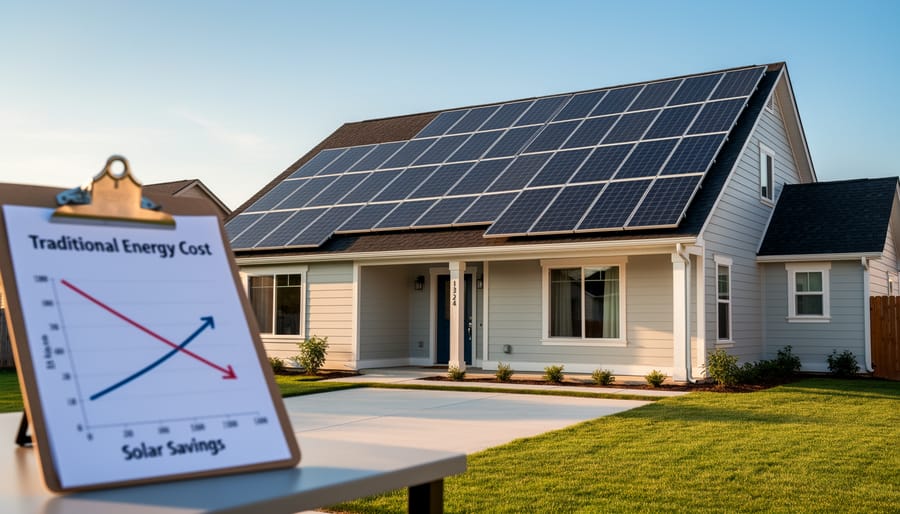
For most homeowners and small businesses in 2026, renewable energy presents a clear cost advantage through rooftop solar installations. The median payback period for residential solar systems now sits at 6-8 years in states with net metering, after which electricity becomes virtually free aside from minimal maintenance. Federal tax credits covering 30% of installation costs make the upfront investment manageable, while financing options like solar loans and leases eliminate the need for large capital outlays.
If your roof faces limitations, shading, structural issues, or rental status, community solar programs offer an alternative. You subscribe to a shared solar farm and receive credits on your utility bill, typically saving 10-15% on electricity costs with no installation required.
Grid power mix matters most when rooftop solar proves unviable. Choose utility providers offering higher renewable percentages, especially if your state allows energy choice. For small businesses with high daytime electricity use, solar aligns perfectly with peak consumption patterns, maximizing immediate savings while demonstrating environmental commitment to customers who increasingly value sustainability practices.
For Large Organizations and Municipalities
Large organizations and municipalities face different economic calculus than homeowners, with procurement volumes that unlock significant cost advantages for renewable energy. Corporate sustainability officers should prioritize power purchase agreements (PPAs), which lock in fixed electricity rates for 10-25 years and eliminate fossil fuel price risk. Many Fortune 500 companies now sign virtual PPAs that deliver cost savings averaging 15-20% below grid rates while meeting carbon reduction targets.
Local governments considering utility-scale projects benefit from tax-exempt financing structures that reduce renewable capital costs by 25-30% compared to private developers. Community choice aggregation programs let municipalities procure renewable energy at wholesale rates for constituents, building energy resilience while supporting local economic development.
On-site generation makes sense when you control large rooftops or land parcels near load centers. Campus-style facilities achieve fastest payback through solar-plus-storage systems that provide both cost savings and backup power. Calculate total cost of ownership over 20 years rather than upfront capital, renewables consistently win this analysis even without considering emissions reductions or corporate responsibility benefits that increasingly matter to stakeholders, employees, and customers.
For Policy Advocates and Community Leaders
Policy advocates and community leaders now possess their strongest economic argument yet: renewable energy costs less than fossil fuels in most contexts, eliminating the “jobs versus environment” false dichotomy that has stalled progress for decades. When presenting to city councils or state legislatures, lead with local LCOE data showing solar and wind beating coal and gas, then layer in avoided health costs from cleaner air, which disproportionately benefit low-income and minority communities facing the worst pollution burdens.
Frame renewable transitions through an environmental justice lens by highlighting how decentralized solar projects create local wealth and resilience rather than extracting resources from vulnerable areas. Connect energy policy to broader climate mechanisms: explain how clean energy deployment strengthens carbon markets by reducing emissions at the source, and demonstrate how municipalities can track CO2 units to measure their transition impact. Build coalitions with labor unions around renewable job creation, installation, maintenance, and manufacturing roles that can’t be outsourced. The cost data now supports the moral imperative, making this the moment to push ambitious renewable targets without apology.
What This Means for Climate Justice and Our Energy Future
The cost crossover we’ve reached fundamentally reshapes what’s possible in the fight for climate justice. When renewable energy was expensive, asking communities to choose clean power often meant asking them to pay more, a burden that fell hardest on those with the least resources. Now that solar and wind compete on price alone, we can pursue both economic advantage and climate impact simultaneously, removing the false choice between affordability and sustainability.
This alignment creates real pathways for equitable energy access. Low-income households can benefit from community solar programs that reduce utility bills while cutting emissions. Frontline communities historically burdened by pollution from fossil fuel infrastructure can advocate for renewable development that delivers both cleaner air and economic opportunity through local jobs. Municipalities can invest in resilient microgrids that strengthen energy security while advancing climate goals, knowing the economics work in their favor.
The momentum is building from the ground up. Cooperatives, faith-based organizations, and neighborhood groups are launching solar projects that keep energy dollars circulating locally rather than flowing to distant corporations. Activists can now point to cost data as powerful ammunition for policy change, making renewable transitions not just environmentally sound but fiscally responsible. Every level of engagement, from installing panels on your roof to organizing community power initiatives to advocating for utility-scale clean energy mandates, contributes to a more just and sustainable energy system.
What Each Option Is
Before comparing costs, let’s establish what we’re actually talking about when we say “fossil fuels” and “renewable energy.”
Fossil fuels are energy sources formed from ancient organic matter, primarily coal, natural gas, and oil. These materials burn to generate heat, which typically drives turbines that produce electricity. They’ve powered modern civilization for over a century because they’re energy-dense, relatively easy to transport, and provide power on demand. However, burning them releases carbon dioxide and other pollutants that drive climate change and harm public health.
Renewable energy refers to power generated from naturally replenishing sources that don’t deplete over time. The main players are solar (capturing sunlight through photovoltaic panels), wind (using turbines to harness air movement), hydroelectric (generating power from flowing water), and geothermal (tapping Earth’s internal heat). Unlike fossil fuels, these sources produce little to no direct emissions during operation and don’t require continuous fuel purchases.
The fundamental economic difference is simple: fossil fuels demand ongoing fuel costs, while renewables require larger upfront investment but minimal operating expenses once installed.
Who Should Choose Which
Choosing renewable energy makes sense if you control your energy source, value long-term cost predictability, or prioritize environmental impact. Homeowners with suitable roofs, businesses with capital for upfront investment, and organizations committed to sustainability goals should lean toward solar, wind, or hybrid renewable systems. The 25-30 year lifespan of solar panels means decades of near-zero fuel costs, insulating you from price swings.
Fossil fuels remain practical only in limited circumstances: remote locations without grid access where diesel generators provide temporary power, or during transition periods while scaling renewable infrastructure. If you’re renting, lack decision-making authority over energy procurement, or need immediate power without capital outlay, you may default to fossil-based grid electricity, but explore community solar programs that remove those barriers.
For policymakers and community leaders, the choice is clear: renewables deliver cost savings, health benefits, and climate progress simultaneously. The economic case now aligns with justice imperatives. If you’re advocating for systemic change, cost data strengthens your position that renewable transition serves both fiscal responsibility and equitable energy access.
Common Questions About Energy Cost Comparisons
Common Questions About Energy Cost Comparisons
As the cost landscape shifts in favor of renewable energy, questions naturally arise about what these changes mean in practice. Here we address the most common concerns and clarifications people seek when evaluating energy economics.
Are renewables really cheaper than fossil fuels now?
Yes, in most markets solar and wind are now cheaper than new coal or gas plants when comparing levelized costs. Existing fossil fuel plants may still be cheaper to operate than building new renewables, but that advantage disappears when they require major repairs or replacement.
Don’t renewable energy costs depend heavily on subsidies?
While incentives help accelerate adoption, renewables have reached cost parity on their own merits in most regions. Fossil fuels have historically received far larger subsidies globally, and even without tax credits, utility-scale solar and wind frequently beat fossil fuel alternatives.
How much do energy costs vary by location?
Geography matters significantly: solar performs best in sunny regions, wind in windy areas, and hydroelectric near water resources. Local utility rates, available incentives, and installation costs also create regional variation, which is why site-specific analysis matters for any project.
What’s the typical payback period for residential solar?
Most homeowners see payback within 6 to 12 years, depending on local electricity rates, system size, and available incentives. After payback, the panels continue generating essentially free electricity for another 15-plus years.
These answers reflect the current reality that renewable energy has transitioned from aspirational to economically advantageous in most contexts. The questions about regional variation and payback periods highlight an important truth: while the broad trends favor renewables, individual circumstances still matter. A household in a region with low electricity rates and poor solar resources might face a longer payback than one with expensive grid power and abundant sunshine.
For those wondering how to get started, the path depends on your situation. Homeowners can request solar quotes from local installers or explore community solar programs. Businesses might investigate power purchase agreements that require no upfront investment. Renters and those unable to install systems can often choose renewable energy through their utility or support clean energy advocacy in their community. The economic fundamentals now support taking that first step, whatever form it takes for you.
The numbers tell a story of transformation. Renewable energy has achieved what many thought impossible just a decade ago: matching and often beating fossil fuels on pure economics. When the financial case aligns with the environmental imperative, the path forward becomes clear.
This isn’t just about replacing one energy source with another. It’s about building power systems that serve communities equitably, reduce harm to public health, and create stable, predictable costs for decades to come. The cost barrier has fallen. What remains is the work of implementation, scaling solutions, advocating for policy support, and ensuring no community gets left behind in this transition.
You have agency in this shift. Whether you’re installing solar panels, pushing your employer toward renewable power purchase agreements, or joining local climate justice initiatives, your choices compound into systemic change. Mining the Sun offers tools, research, and community connections to support your next steps.
The economics now work in favor of a livable planet. The momentum belongs to those willing to act on it.