
The five main non renewable energy sources are coal, oil, natural gas, nuclear (uranium), and peat. Each one is finite, formed over millions of years or drawn from limited mineral deposits, and each has powered homes, factories, and vehicles for generations. Coal built the first industrial economies. Oil still moves most of the world’s freight and passengers. Natural gas heats kitchens and balances power grids, nuclear delivers steady low-carbon electricity, and peat remains a local fuel in parts of northern Europe, even as its carbon stakes draw growing attention.
Knowing what these sources are, and what sets them apart, helps communities make smarter choices about what comes next. The good news is that the shift is already underway. Solar, wind, and storage are giving households, schools, and local governments real alternatives, and the conversation has moved from “if” to “how fast.” If you’re weighing the numbers behind that decision, our breakdown of fossil vs renewable costs is a practical place to start.
Below, we walk through each of the five sources with a plain-language explanation of how it works, where it’s used, and how it fits into the bigger transition. A quick comparison table and FAQ follow, so you can leave with clear answers and ideas you can put into action in your own community.
How We Chose These 5 Non Renewable Energy Sources
Every list needs ground rules, so here is how we decided which sources made the cut. We looked for energy sources that meet four tests:
- Global use: they power electricity, transport, or heating for large numbers of people worldwide.
- Finite supply: they exist in limited amounts and cannot be replaced on a human timescale.
- Role in the energy mix: they still supply a meaningful share of what communities rely on today.
- Relevance to the transition: they matter to the conversation about moving toward renewable energy.
Three of the five are fossil fuels, a term for fuels formed from ancient plants and animals buried for millions of years. Coal, oil, and natural gas all fit here. A finite resource is simply one that can run low because nature makes it far more slowly than we use it.
Nuclear earns its spot for a reason that surprises many people. Nuclear plants emit very little carbon while running, but they rely on mined uranium, and uranium is finite. Peat is the smallest of the group by global scale. Still, it fuels homes and power in certain regions and sits on carbon-rich peatlands, which makes it a locally important part of the story.
1. Coal: The Original Powerhouse Facing a Turning Point
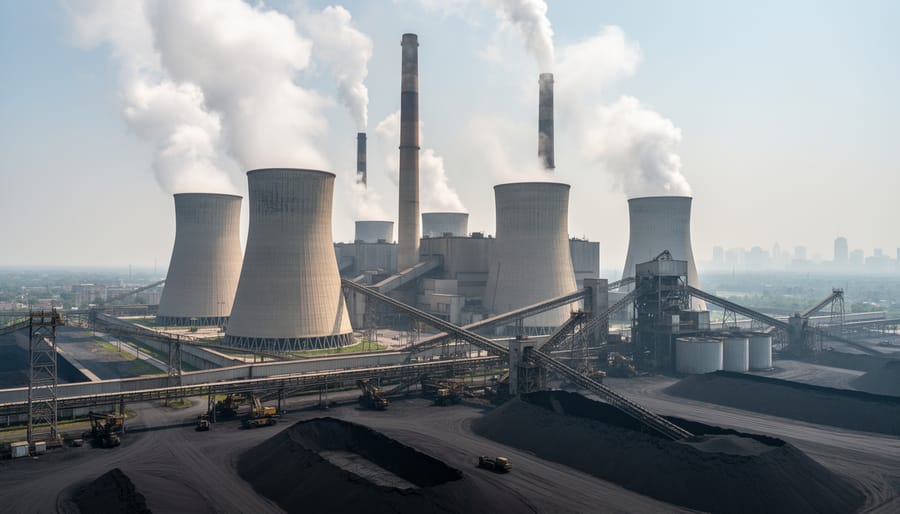
Coal is a sedimentary rock made mostly of carbon, formed from ancient plant matter that piled up in swampy forests hundreds of millions of years ago. Over time, layers of sediment buried those plants, and heat and pressure slowly turned them into peat, then lignite, and eventually harder grades like bituminous coal and anthracite. That process takes millions of years, which is why coal counts as a non renewable energy source: we burn it far faster than nature can make more.
Coal powered the Industrial Revolution. It drove steam engines, fired steel mills, and later became the backbone of electricity generation. In the 20th century, coal-fired power plants lit up homes and factories across much of the world, and many regions built their economies and local identities around mining it.
That legacy comes with real costs. Burning coal releases carbon dioxide, the main greenhouse gas driving climate change, along with sulfur dioxide, nitrogen oxides, and fine particles that affect air quality and respiratory health. Modern pollution controls can reduce some of these emissions, but they can’t eliminate the carbon released when coal burns.
Here’s the hopeful part. Coal communities aren’t being left behind in the story of the transition. Many are becoming leaders in it. Former mining regions are hosting solar farms on reclaimed land, and workers are applying skills in electrical systems, heavy equipment, and safety to wind, solar, and grid jobs. The idea behind a “just transition” is simple: as coal declines, workers and towns get training, new opportunities, and a voice in what comes next, so the shift to clean energy lifts everyone.
2. Oil: Fueling Transport and Industry, Now Making Room for Alternatives
Crude oil is the second source on our list, and it touches daily life more directly than most of us realize. It forms from the remains of tiny marine organisms that settled on ancient sea floors and were buried under layers of sediment. Over millions of years, heat and pressure turned that organic matter into the liquid we pump today. Because that process takes far longer than any human timescale, oil counts as non renewable: we are using it much faster than nature can make more.
Oil’s reach goes well beyond the gas tank. Refined into gasoline, diesel, and jet fuel, it powers most cars, trucks, ships, and planes. It is also the raw material for plastics, synthetic fabrics, lubricants, and countless petrochemical products, from packaging to medical supplies. That versatility explains why it has stayed so dominant, and why the shift away from it is a gradual, practical effort rather than an overnight switch.
The encouraging news is that alternatives are growing. Electric vehicles, e-bikes, and expanded public transit cut oil demand directly, especially when charged with solar or wind power. Biofuels can help in sectors that are harder to electrify, and efficiency gains, such as better engines and smarter logistics, stretch every barrel further.
Here are a few steps you can take right now:
– Choose walking, cycling, carpooling, or public transit for short trips when you can.
– Consider an electric or hybrid vehicle when it’s time to replace your car.
– Reduce single-use plastics to lower demand for petrochemicals.
– Support local and national policies that fund clean transportation and charging infrastructure.
Small choices add up, especially when a whole community makes them together.
3. Natural Gas: The ‘Bridge Fuel’ and Its Role in the Transition
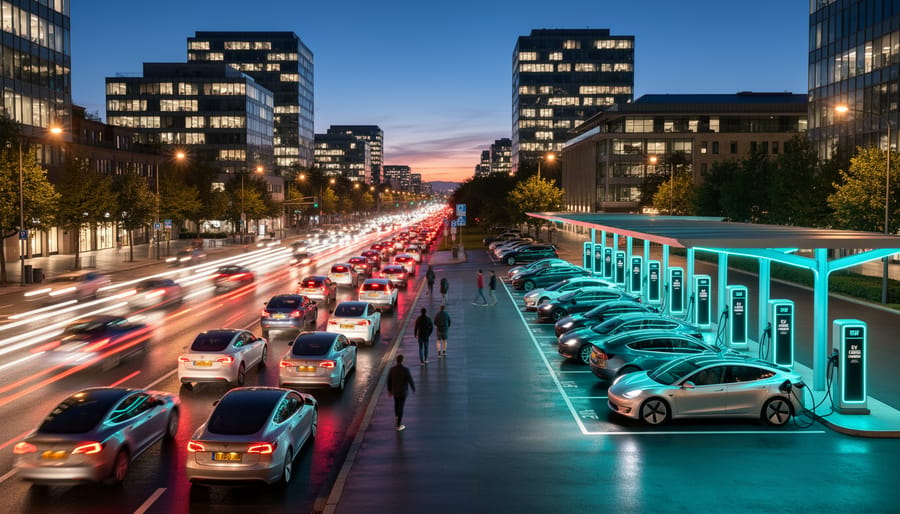
Natural gas is mostly methane, a colorless fuel that formed from ancient organisms buried deep underground. Most of us meet it every day: it heats homes, fires up kitchen stoves, and powers a large share of the world’s electricity.
It earns the nickname “bridge fuel” because it burns cleaner than coal. When used to generate electricity, gas typically emits roughly half the carbon dioxide of coal and far fewer air pollutants. Where a community replaces an old coal plant with a gas plant, local air often improves, and gas plants can ramp up and down quickly to back up wind and solar when the weather changes.
That leakage is where the story gets more nuanced. Methane is potent trapping far more heat than carbon dioxide over its first couple of decades in the atmosphere. If enough gas escapes along the way, it can erode the climate advantage gas has over coal. The good news is that leaks are fixable, and better monitoring, tighter equipment standards, and prompt repairs can cut them significantly.
So what does a realistic pathway look like? Gas can play a supporting role while solar, wind, storage, and efficiency scale up, as long as we keep leaks low and avoid building new infrastructure meant to last for generations. Think of it as a bridge: useful for the crossing, but not a place to settle down. You can help by asking your utility about its renewable plans and by choosing efficient, electric-ready appliances when it’s time to upgrade.
4. Nuclear (Uranium): Low-Carbon but Finite
Nuclear power runs on uranium, a metal that has to be mined and processed into fuel. That’s the key reason it lands on a list of non renewable energy sources. Uranium formed in the earth over billions of years, and the economically recoverable supply is limited. Once we’ve mined and used it, we can’t regrow it on a human timescale.
What sets nuclear apart from coal, oil, and gas is what happens during operation. A nuclear plant produces electricity through fission, not combustion, so it releases very little carbon dioxide while running. That’s why many climate planners treat it as a low-carbon source even though the fuel itself is finite.
Nuclear also plays a steady role in the energy mixes of many countries, supplying reliable power around the clock. That consistency can complement solar and wind, which vary with sunshine and weather. Together, a mix of sources can keep grids stable while renewables grow.
Waste is the main consideration. Spent fuel stays radioactive for a long time, so it needs careful storage, and countries are still working out long-term solutions. The volumes are small compared with the waste from fossil fuels, but they demand strict management.
Cleaner energy choices increasingly connect to wider climate finance too. If you’re curious how emissions reductions are traded and scaled across regions, the idea of carbon markets linkage shows how separate systems can join forces to expand climate impact.
5. Peat: The Overlooked Fuel with Big Carbon Stakes
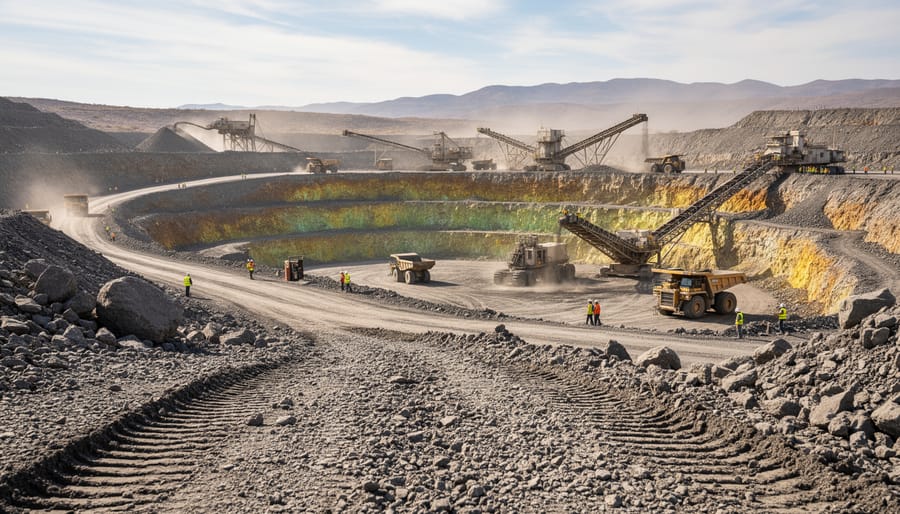
Peat is partially decomposed plant material that builds up slowly in waterlogged wetlands. In parts of Ireland, Finland, Russia, and Scotland, it’s cut, dried, and burned for home heating and sometimes power generation. It’s the smallest player on our list, but regionally it matters.
So why call it non renewable? Peat grows at roughly a millimeter a year. A bog that took thousands of years to form can be stripped in a few seasons, which means it can’t be replenished on a human timescale. In practice, it behaves like a finite fuel.
The bigger story is carbon. Peatlands cover only about three percent of the planet’s land, yet they hold more carbon than all the world’s forests combined. Drain or burn a peatland, and that stored carbon escapes into the atmosphere. Leave it wet and intact, and it keeps locking carbon away.
That’s why protecting peat is one of the most hopeful stories in climate action. Rewetting drained bogs, restoring native vegetation, and shielding intact peatlands are all nature-based solutions that deliver real results. Many of these efforts are funded through carbon offset projects, and they’re often led by local communities who also gain jobs and cleaner landscapes.
As part of broader renewable energy transitions peat shows that leaving a resource in the ground can be as powerful as replacing it. You can take part by supporting verified peatland restoration projects and backing local conservation groups.
Non Renewable Energy Sources at a Glance
Here’s a quick reference for all five sources. Each is finite, but they differ in how they’re used and what they mean for the climate.
- Coal: Mainly used for electricity and heavy industry. It carries the highest carbon intensity of the group, so it’s a priority for phase-down.
- Oil: Powers transport and feeds plastics and petrochemicals. Electric mobility and efficiency gains are steadily reducing demand.
- Natural gas: Used for heating, power, and cooking. It burns cleaner than coal, but methane leakage keeps it a transitional fuel.
- Nuclear (uranium): Delivers low-carbon electricity, yet depends on a finite mined fuel and requires careful waste management.
- Peat: A regional fuel that renews far too slowly to count as sustainable. Protecting peatlands keeps large carbon stores intact.
Seeing them side by side makes one thing clear: every option on this list has a cleaner alternative worth exploring. Pairing smarter energy choices with GHG reduction efforts is how communities turn that knowledge into real progress.
Common Questions About Non Renewable Energy and the Renewable Shift
Curious minds often ask the same handful of questions when they first look at where our energy comes from. Here are clear answers, along with ways you can help move the transition forward.
What makes an energy source non renewable?
It forms over millions of years, or exists in a fixed amount, so we use it far faster than nature can replace it. Coal, oil, natural gas, uranium, and peat all fit this description.
Is nuclear renewable?
No. Nuclear power runs on mined uranium, which is finite, even though plants produce very little carbon while operating.
Will non renewable sources run out?
Eventually, yes, because supplies are limited. In practice, rising costs, environmental concerns, and better clean alternatives are likely to shift our choices well before the last deposit is gone.
How can individuals and communities support the transition?
Start with efficiency at home, choose cleaner transport, and back local solar and wind projects. Supporting peatland protection and restoration is another community-friendly way to help.
The encouraging part is that every one of these steps is within reach. Small choices add up, and when neighbors, schools, and local groups act together, the shift toward renewable energy gains real momentum. Understanding the limits of these five sources is simply the starting point for building something better.
Moving Forward: What These Five Sources Teach Us About the Transition
Coal, oil, natural gas, uranium, and peat all took millions of years to form, and we’re drawing them down far faster than nature can replace them. Knowing how each one works, what it costs, and where it fits gives you real footing for smarter decisions at home, at work, and at the ballot box.
The shift is already underway, and it grows through ordinary people making practical choices. Explore renewable options available where you live, back offset projects that protect carbon-rich landscapes like peatlands, and bring your questions and ideas to the Mining the Sun community. Every step you take helps build a cleaner energy future.