
Four major green power systems are experiencing critical shifts in 2026, driven by regulatory consultations, investment commitments, and evolving market frameworks that could accelerate or delay the UK’s clean energy transition. Solar, wind, battery storage, and carbon capture technologies now sit at the intersection of policy reform and commercial deployment, with £70 billion in transmission infrastructure planned through 2031 to support their integration.
The 2026 green energy update reveals a landscape shaped by political timing and structural challenges. Recent election cycles disrupted the publication of key consultation responses, including reforms to the Contracts for Difference scheme that directly affect how renewable projects secure funding. Meanwhile, carbon capture contracts were scheduled for finalisation in September, representing a tangible milestone for what has long been a promising but unproven technology at scale.
These developments matter because they determine not just which projects move forward, but who controls the energy transition. Traditional industrial power generation models continue to influence market design, creating barriers for community energy initiatives and distributed systems that could democratise power generation. The ongoing review of electricity market arrangements will either entrench incumbent advantages or open pathways for smaller, innovative players.
For sustainability professionals and advocates, the coming months offer specific monitoring opportunities: watching for delayed consultation responses, tracking transmission investment progress against the Ofgem timeline, and assessing whether carbon capture contracts deliver on their September targets. Each system faces distinct hurdles, but together they illustrate whether policy momentum can translate into real-world capacity.
What Changed in Green Power Systems This Year
The first half of 2026 brought a cascade of procedural shifts across four critical green power systems, with regulatory timelines colliding against political calendars and long-awaited infrastructure commitments finally materializing. Solar power development faced consultation delays as the Department for Energy Security and Net Zero worked to finalize amendments to the Contracts for Difference scheme, with responses initially expected before Allocation Round Seven but potentially pushed back by election-period constraints following Parliament’s dissolution on 30 May. Wind energy systems saw the clearest forward movement, with Ofgem projecting approximately £70 billion in transmission investment between 2025 and 2031, a commitment that acknowledges decades of grid connection bottlenecks while raising questions about who controls the infrastructure expansion. Energy storage encountered its own procedural hurdle, as the second consultation on the Review of Electricity Market Arrangements (REMA) joined the roster of projects vulnerable to delay during the political transition.
Carbon capture and storage rounded out the quartet, with contract finalization targeted for September 2026 despite ongoing debates about whether CCUS investments complement or compete with direct renewable deployment. These developments share a common thread: each represents a moment where technical readiness meets institutional friction, where the pace of decarbonization hinges not on technology availability but on who controls the approval processes, investment priorities, and market rules. The net effect is a 2026 landscape where green power systems advanced unevenly, some gaining financial certainty, others waiting on delayed policy clarity, while the underlying power dynamics between established utilities and renewable innovators remained firmly in play.
1. Solar Power Systems: Contract Delays and Market Consultation
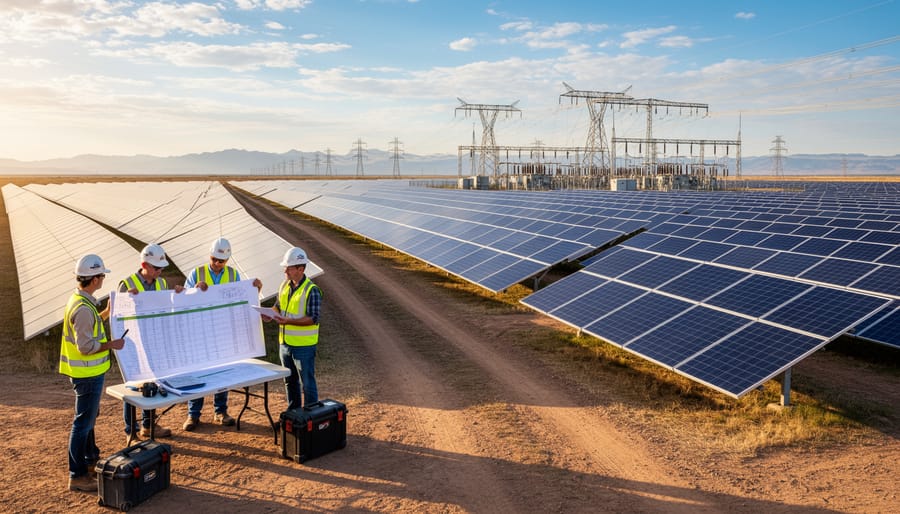
The Contracts for Difference scheme consultation closed on 7 March 2026, kicking off what solar developers hoped would be a swift path to clarity before Allocation Round Seven. Instead, the expected government response became tangled in election-period bureaucracy. When Rishi Sunak announced a general election for 4 July, with Parliament’s prorogation and dissolution set for 30 May, the Department for Energy Security and Net Zero effectively entered a holding pattern. Projects awaiting contract amendments now face months of uncertainty while competitors position themselves to capitalize on the delay.
Power companies benefit substantially from this stasis. Every month that passes without finalized CfD rules allows incumbent utilities to maintain their negotiating leverage with smaller solar developers who need contract certainty to secure financing. The longer community solar projects wait for policy clarification, the more attractive they become as acquisition targets for larger players who can weather regulatory ambiguity. The delay also pushes the timeline for Allocation Round Seven, giving fossil fuel operators extra runway to extract returns from existing generation assets before renewable capacity floods the market.
Community solar initiatives are countering with creative approaches. Some are forming cooperative purchasing agreements to share legal costs for contract interpretation, while others are bypassing the CfD route entirely by signing corporate power purchase agreements directly with large electricity users. A handful of regional networks have accelerated their planning applications to lock in grid connection slots before the post-election policy refresh potentially reshuffles priorities.
The consultation response, whenever it arrives, will reveal whether DESNZ recognizes these dynamics or treats the delay as mere administrative friction. For solar developers operating on tight capital schedules, the difference between a proactive policy framework and a reactive one compounds with each passing quarter.
2. Wind Energy Systems: Grid Connection Investment Surge
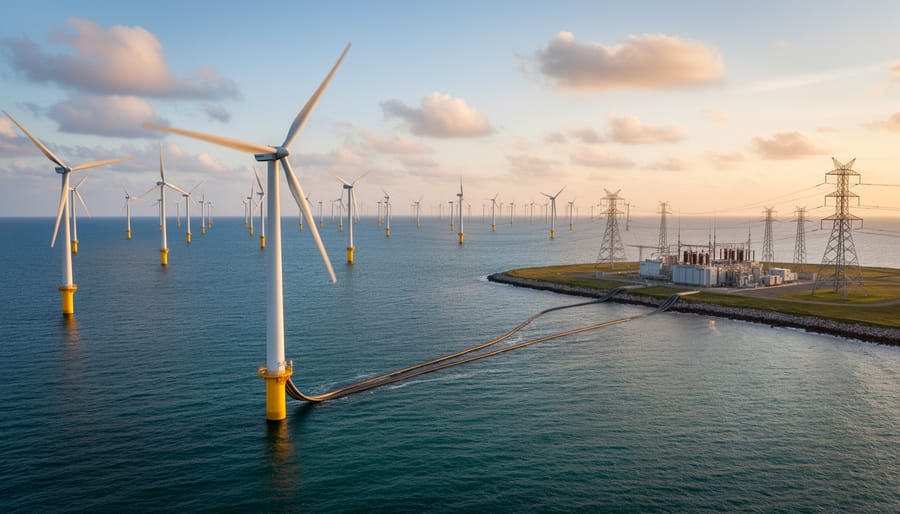
Ofgem’s £70 billion transmission investment program between 2025 and 2031 marks the largest grid infrastructure upgrade in UK history, targeting the bottlenecks that have constrained wind energy deployment for years. This surge directly addresses connection delays that have left dozens of offshore and onshore wind projects stranded in approval queues, sometimes for a decade or longer. While the investment scale appears transformative, the timeline reveals how deeply legacy grid architecture has protected incumbent power companies from renewable competition, by controlling access to transmission infrastructure, traditional utilities maintained market dominance even as wind costs plummeted below fossil generation.
The investment program prioritizes several critical areas:
- £70 billion total investment spanning six years (2025-2031)
- Focus on offshore wind connection infrastructure in Scotland and the North Sea
- Onshore transmission upgrades linking northern wind generation to southern demand centres
- Expected doubling of grid capacity for renewable energy connections
For wind farm developers, the investment timeline creates both opportunity and strategic pressure. Projects that secure grid connection agreements within this window will benefit from accelerated infrastructure buildout, but delays in finalizing contracts could push developments into a post-2031 environment where funding priorities may shift. This dynamic mirrors historical patterns where incumbent utilities used connection timelines as gatekeeping mechanisms, approving projects aligned with their generation portfolios while slow-walking independent renewable developers through regulatory hurdles.
The infrastructure priorities also highlight tensions within the energy transition itself. Massive transmission investment enables wind scaling, but it simultaneously reinforces centralized grid models that favour large-scale generation over distributed renewables. Community wind projects and local energy networks must navigate the same connection queues as multinational developers, and the investment program allocates minimal resources to size batteries and storage infrastructure that would reduce transmission dependency altogether. Advocates argue that true grid modernization would decentralize control, not just expand capacity for existing power structures.
3. Energy Storage Systems: Battery Integration and Market Reform
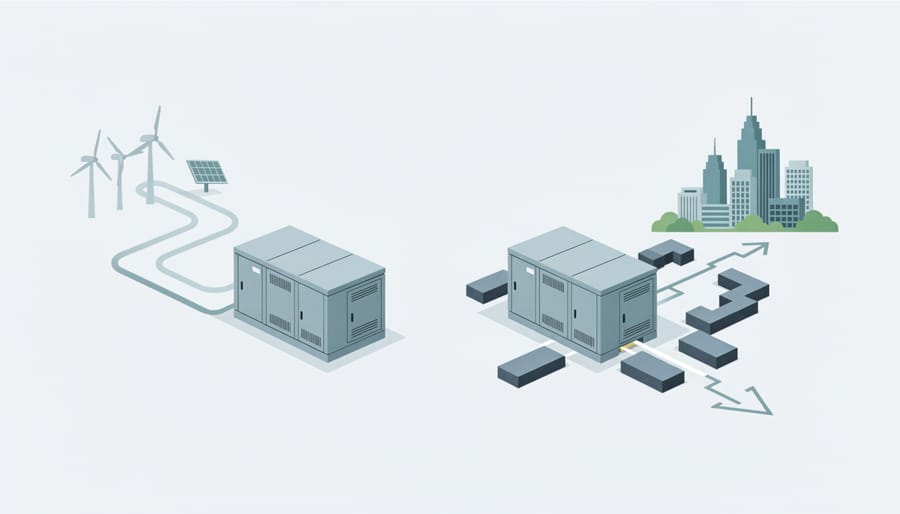
Energy storage systems stand at a regulatory crossroads. The second consultation on the Review of Electricity Market Arrangements (REMA) faced potential delays during the election period, creating uncertainty for battery operators planning grid-scale deployments. This matters because REMA determines whether storage competes on equal terms with conventional generators or remains locked in market structures designed for coal and gas.
Traditional power companies have spent years resisting reforms that would recognize storage as a distinct asset class. Current market rules often force battery systems to register as generators, limiting their ability to provide multiple services simultaneously, balancing frequency, shifting peak demand, and absorbing excess renewable output. Incumbent utilities prefer these constraints because they protect baseload generation revenues and maintain artificial scarcity during high-demand periods.
The delayed REMA consultation was set to address stacked revenue streams, allowing storage operators to capture value from energy arbitrage, capacity provision, and grid services within a single contract. This reform threatens the business model of companies whose profits depend on price volatility and capacity payments tied to dispatchable fossil generation. By dragging out consultation timelines, incumbents gain months to lock in contracts under the old rules while positioning themselves to dominate any reformed market structure through vertical integration.
Battery deployment hinges on these technical market details. Without clear rules enabling multiple revenue streams, investors face uncertainty that slows project finance. The reform delay also intersects with carbon markets linkage where storage’s ability to absorb zero-carbon generation directly influences emissions reduction credits and cross-border trading mechanisms. When consultation responses finally emerge, watch whether the proposed framework genuinely levels the playing field or preserves incumbent advantages through complexity and transition periods.
4. Carbon Capture and Storage: Contract Finalization Timeline
Carbon Capture, Usage and Storage technology sits at the centre of a heated debate within the green energy transition. While CCUS contracts were expected for finalization in September 2026, the broader question remains whether these systems represent genuine climate solutions or expensive distractions that extend fossil fuel infrastructure under a green banner.
CCUS technology captures carbon dioxide emissions from industrial processes and power generation, then either stores it underground or repurposes it for commercial use. Proponents argue it provides a necessary bridge for hard-to-decarbonize sectors like steel and cement production. Critics counter that the technology is energy-intensive, unproven at scale, and diverts resources from proven renewable alternatives that deliver faster emissions reductions.
The September finalization timeline reveals a strategic positioning by traditional energy companies. Many fossil fuel producers have pivoted their public messaging toward CCUS as evidence of climate commitment, securing government contracts that subsidize their infrastructure while maintaining their core business model. This approach allows incumbents to frame themselves as climate leaders without fundamentally transforming their operations or relinquishing market control.
The contracts carry substantial public funding, raising questions about opportunity cost. Each pound directed toward CCUS infrastructure represents a pound not invested in solar panels, wind turbines, or battery storage with proven track records and falling costs. For communities facing immediate climate impacts, the timeline matters profoundly: delayed renewable deployment means prolonged fossil fuel dependence and continued emissions.
The tension isn’t simply technical. It reflects competing visions for energy’s future, one that gradually retrofits existing power structures versus one that accelerates systemic transformation toward genuinely clean systems. Contract details matter because they lock in infrastructure investments for decades.
Why These Developments Matter for Climate Justice
The timeline slippages and consultation delays outlined above are not mere bureaucratic inconveniences. They translate directly into months of foregone renewable generation, extended reliance on fossil fuels, and cumulative carbon emissions that make 2030 and 2050 targets harder to reach. When the Contracts for Difference response stalls or the REMA consultation faces postponement, developers cannot finalize financing, grid operators defer connections, and shovel-ready solar and wind projects sit idle. Communities already bearing the highest pollution burdens, often low-income neighborhoods near fossil infrastructure, continue to face air quality and health impacts while cleaner alternatives wait for regulatory clarity.
The £70 billion transmission investment between 2025 and 2031 represents historic potential, yet how those funds are allocated will determine whether benefits reach communities equitably or reinforce existing power imbalances. Incumbent utilities have historically controlled grid access, using connection queues and upgrade costs to favor their own assets. Transparent, participatory planning processes can ensure that battery storage, community solar, and distributed wind projects gain fair grid access rather than being sidelined by legacy players. Energy equity depends on breaking these structural bottlenecks, not just building more infrastructure, but building it in ways that empower local ownership, lower energy burdens for vulnerable households, and dismantle the gatekeeping that has slowed decarbonization for decades.
What to Watch: Key Milestones and Community Actions
The delayed consultations will likely resume after September 2026, when CCUS contracts reach finalization and policy bandwidth opens up. Watch for the REMA consultation’s second phase and the Contracts for Difference scheme response, both pushed back by election-period disruptions at DESNZ. These documents will reveal whether policymakers prioritized flexibility for renewables and storage or maintained incumbent-friendly structures.
For local engagement, regional grid planning forums offer the most direct influence over Ofgem’s transmission investment priorities. National Grid’s regional development programmes publish connection queue updates quarterly, showing which projects secured grid capacity and which face delays. Cross-reference these queues with your area’s renewable energy zones to identify bottlenecks where community advocacy can push for faster infrastructure build-out.
When will the delayed consultations resume?
DESNZ consultations pushed back by the July election are expected to resume after September 2026, once CCUS contract finalization concludes. The REMA second consultation and Contracts for Difference response should follow shortly after.
How can communities influence grid investment priorities?
Participate in regional grid planning forums hosted by National Grid and submit evidence to Ofgem’s investment consultations, highlighting local renewable projects that need connection capacity. Local councils can also request grid constraint mapping to identify priority corridors.
What recourse exists when connection timelines slip?
Developers can escalate delays through Ofgem’s complaint procedures, but communities can amplify pressure by raising grid bottlenecks with MPs and documenting delays in planning objections. Collective evidence from multiple projects carries more weight than individual complaints.
How do I track local green power developments?
Check your local authority’s planning portal for renewable applications, subscribe to National Grid’s regional stakeholder updates, and follow local environmental groups who often monitor and publicize grid infrastructure proposals.
Beyond formal channels, track investment announcements from network operators implementing Ofgem’s £70 billion transmission plan. These reveal which regions receive substation upgrades and high-voltage lines first, signaling where solar, wind, and battery projects can connect soonest. If your area lags behind despite strong renewable potential, coordinate with neighbouring communities to present a unified case for accelerated infrastructure.
Document everything. When connection dates shift or consultations close without implementation timelines, record the gap between promise and delivery. This evidence base becomes powerful when advocating for binding commitments rather than aspirational targets, especially as the 2027 policy cycle opens and ministers seek demonstrable progress on climate pledges.
These four green power systems, solar, wind, energy storage, and carbon capture infrastructure, aren’t just technical categories. They’re the pressure points where policy decisions either accelerate or stall the shift away from fossil-dependent grids. The consultations, investment timelines, and contract schedules detailed here demonstrate that climate progress happens in the unglamorous machinery of regulatory process, not through broad intentions alone.
Understanding these mechanisms transforms passive concern into strategic awareness. When you know that a consultation closed in March or that transmission investment spans 2025 to 2031, you can track whether commitments materialize or fade. You can ask harder questions about delays, push for transparency in contract negotiations, and connect local energy projects to national policy frameworks.
The momentum for systemic change doesn’t build from distant agencies working in isolation. It accumulates when communities, professionals, and advocates recognize the leverage points and engage them directly, through consultation responses, planning participation, and informed advocacy. This knowledge becomes collective power when shared and acted upon, turning regulatory detail into a roadmap for holding decision-makers accountable and advancing the equitable energy transition we urgently need.