
The EU Emissions Trading System (EU ETS) is Europe’s flagship carbon market that requires heavy polluters to buy a permit for every tonne of carbon dioxide they emit. Launched in 2005 as the cornerstone of European climate policy, this cap-and-trade mechanism now covers roughly 36% of the EU’s total greenhouse gas emissions and sets a firm ceiling on how much pollution industry can produce. For businesses operating in sectors like power generation, manufacturing, and aviation, understanding compliance obligations isn’t optional. For sustainability professionals and climate advocates, tracking how this market drives GHG reduction reveals how policy can reshape entire economies.
Here’s how it works: the EU sets an emissions cap that decreases year by year. Companies receive or purchase allowances, each representing permission to emit one tonne of CO2 equivalent. When firms exceed their allowance allocation, they must buy more on the open market. When they emit less, they can sell surplus allowances. This trading flexibility means the most cost-effective emissions cuts happen first, wherever they’re cheapest to achieve. The price fluctuates with supply and demand, creating a financial incentive that makes pollution expensive and efficiency profitable.
The system has evolved considerably since its inception. On 17 July 2026, the European Commission proposed a targeted revision aimed at strengthening Europe’s industrial competitiveness while supporting delivery of the EU’s 2040 climate target. These updates matter because they signal how carbon pricing will tighten, which sectors face new obligations, and where compliance strategies need to adapt.
Whether you’re determining if your operations fall under EU ETS rules, planning your first compliance cycle, or tracking policy shifts that affect corporate climate strategies, this guide breaks down eligibility, processes, and practical pathways to navigate Europe’s carbon market with confidence.
What the EU Emissions Trading System Is and How It Operates
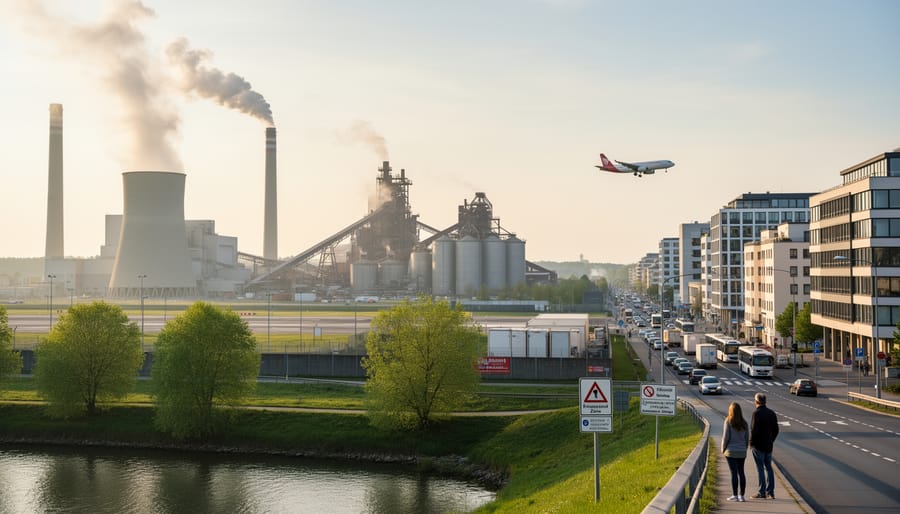
The EU Emissions Trading System operates on a straightforward yet powerful premise: put a price on carbon pollution and let market forces drive the cleanest, most cost-effective solutions. Think of it as a carbon budget for industry. The EU sets an absolute cap on how much greenhouse gas the system’s participants can collectively emit, then issues a corresponding number of allowances. Each allowance represents the right to emit one tonne of CO2-equivalent. Companies covered by the scheme must surrender enough allowances to match their actual emissions each year. If they fall short, they face penalties. If they reduce emissions below their allocation, they can sell surplus allowances to others who need them.
This is the polluter-pays principle in action. Rather than dictating specific technologies or operational changes, the EU ETS makes pollution expensive and efficiency profitable. Companies that innovate to cut emissions faster or further than required can profit from selling their unused allowances. Meanwhile, firms that lag behind must pay market prices to cover their excess. The cap tightens over time, deliberately shrinking the pool of available allowances each year to push emissions steadily downward toward EU climate targets.
Market forces determine the price of allowances, which fluctuates based on supply, demand, energy prices, economic activity, and expectations about future policy. When fossil fuel prices spike, allowances typically become more valuable as switching to cleaner options looks more attractive. When economic growth slows, demand for permits eases and prices may soften. This dynamic pricing creates continuous incentives for emissions reductions, rewarding early movers and penalizing laggards.
The system’s scale is substantial. As of 2022, the EU ETS covers about 36 percent of total EU greenhouse gas emissions, spanning power plants, industrial manufacturing, and aviation. This makes it the world’s largest carbon market and a critical lever in Europe’s decarbonization strategy. By harnessing market mechanisms rather than micromanaging every facility, the EU ETS delivers emissions cuts while allowing businesses the flexibility to choose their own path to compliance.
Who Must Participate: Covered Sectors and Eligibility
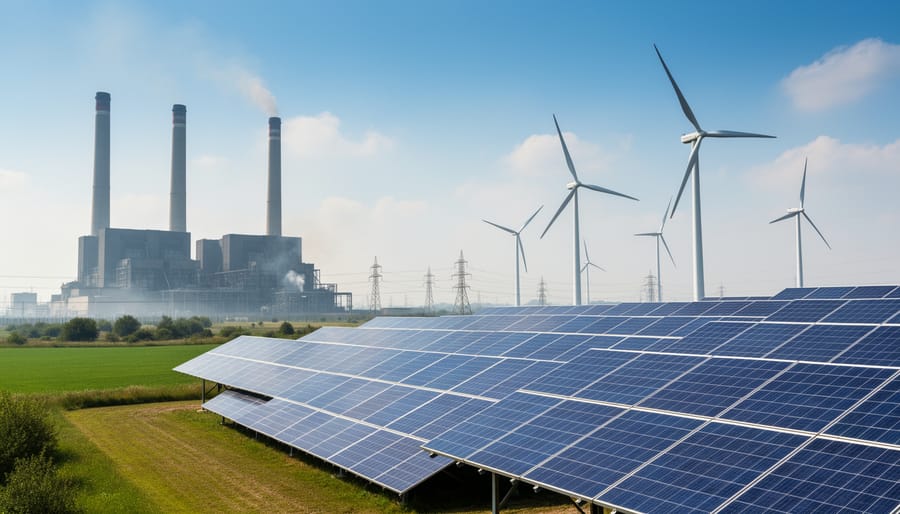
The EU ETS doesn’t cover everyone, participation hinges on whether your facility or activity falls within specific sectors, exceeds certain capacity thresholds, and emits gases the system regulates. As of 2026, the system captures installations and operators across multiple phases of expansion, reflecting the Commission’s strategy to broaden coverage while maintaining practical enforceability.
The core covered sectors include:
- Power and heat generation plants above 20 MW thermal input
- Energy-intensive industries: oil refineries, steel works, cement and lime production, glass manufacturing, ceramics, pulp and paper
- Chemical facilities producing ammonia, nitric acid, adipic acid, and glyoxylic acid
- Commercial aviation for flights within the European Economic Area
- Maritime transport for large vessels calling at EU ports (phased in from 2024)
For stationary installations, factories, refineries, power plants, participation typically triggers when thermal input exceeds 20 megawatts or when production capacity crosses sector-specific thresholds. A steel plant with an annual capacity of over 2.5 tonnes per hour or a cement kiln producing more than 500 tonnes daily would both fall under the mandate. These thresholds ensure the system focuses enforcement resources on significant emitters rather than diffuse, small-scale sources.
The gases regulated depend on the sector. Power and industrial installations must account for carbon dioxide, while nitrous oxide obligations apply to production of nitric, adipic, and glyoxylic acids. Aluminum production faces perfluorocarbon requirements. Aviation operators surrender allowances for CO2 from flights, and maritime coverage, rolled out gradually, applies to CO2 from voyages where at least one port call occurs in the EU.
Smaller installations can sometimes opt out under national simplified schemes if they emit less than 25,000 tonnes of CO2 annually and meet specific conditions, but they must still implement equivalent emissions reduction measures. National authorities maintain registries of covered entities, so if you operate an energy-intensive facility or aviation service touching EU airspace, checking your country’s competent authority list clarifies your status definitively. The system’s design prioritizes large, concentrated emitters where compliance infrastructure delivers the greatest environmental return, currently encompassing around 10,000 installations and over 600 aircraft operators across member states.
How Companies Comply: The ETS Process from Registration to Reporting
Compliance under the EU ETS follows a clear annual cycle that becomes routine once companies establish their systems. Understanding each step helps covered installations manage obligations confidently while taking advantage of market flexibility.
Opening a Union Registry Account
Every operator covered by the ETS must first register with the Union Registry, the central system tracking all allowances and transactions across member states. Your national competent authority handles this registration. You’ll need detailed installation information, legal entity documentation, and appointed representatives authorized to manage the account. The registry functions like a bank account for carbon allowances, recording every transaction and holding your compliance balance. Once approved, you can receive free allocations (if eligible), purchase allowances at auction, or trade on secondary markets.
Monitoring and Reporting Emissions
Accurate measurement forms the backbone of compliance. Each installation must implement an approved monitoring plan that details how it will track CO2 units and other covered greenhouse gases throughout the year. This plan requires approval from your national authority and must follow EU monitoring and reporting regulations specifying calculation methodologies, measurement equipment, and data management procedures.
By March 31 each year, operators submit an emissions report covering the previous calendar year. This report undergoes independent verification by an accredited verifier who checks calculations, data quality, and adherence to the monitoring plan. The verified report then goes to your national authority, establishing the official emissions figure you must cover with allowances.
Surrendering Allowances
After verification, comes the compliance moment. By April 30 annually, operators must surrender one allowance for every tonne of verified emissions from the previous year. You transfer the required number of allowances from your holding account to a government account through the Union Registry. This surrender is irrevocable, those allowances are removed from circulation permanently.
Companies acquire these allowances through multiple channels. Auctions run regularly through designated platforms, where anyone with a Registry account can bid. Free allocation continues for certain sectors at risk of carbon leakage, though quantities have declined over successive ETS phases. Secondary markets offer additional flexibility, you can purchase allowances from brokers, exchanges, or directly from other operators with surplus allocations. Some companies use emission diagrams to visualize trading strategies across linked markets.
Consequences of Non-Compliance
Missing the April 30 deadline triggers serious penalties. Operators face a fine of €100 per tonne of CO2-equivalent not surrendered, adjusted for inflation. Crucially, this penalty doesn’t erase the obligation, you still must surrender the missing allowances the following year, on top of that year’s emissions. Non-compliance also becomes public through a “name and shame” list published annually, creating reputational risks beyond financial penalties.
The cycle then repeats. Banking provisions allow companies to carry surplus allowances forward indefinitely, rewarding early action and providing strategic flexibility for managing carbon costs across years.
Rights and Obligations Under the System
Participating in the EU ETS isn’t just about obligations, it’s also about strategic flexibility. Companies covered by the system gain access to a sophisticated carbon market that offers multiple pathways to compliance while maintaining environmental integrity.
What Participants Can Do
The system grants firms significant operational freedom. Companies can trade allowances freely on secondary markets, selling surplus permits when they’ve reduced emissions below their allocation or buying additional allowances when needed. This trading flexibility extends across borders through carbon market linkage mechanisms that connect the EU ETS with compatible systems in other jurisdictions.
Banking presents another strategic tool. Firms can hold allowances indefinitely, carrying them forward to future compliance years. This lets companies plan long-term decarbonization investments without losing the value of early emission reductions. When allowance prices are expected to rise, banking becomes a hedge against future costs.
Eligible installations can access free allocation under specific conditions, particularly for sectors exposed to carbon leakage risk, industries that might relocate outside Europe to avoid carbon costs. These allocations are calculated using benchmarks based on the most efficient production techniques in each sector. Additionally, all participants can bid for allowances in regular auctions, which have become the primary method of allowance distribution as free allocation phases down.
What Participants Must Do
| Rights | Obligations |
|---|---|
| Trade allowances on open markets | Monitor emissions with approved methodologies |
| Bank allowances for future years | Submit annual emissions reports by March 31 |
| Access free allocation (if eligible) | Surrender sufficient allowances by April 30 |
| Participate in regular auctions | Undergo independent third-party verification |
| Engage in cross-border trading | Maintain active Union Registry account |
Compliance obligations are non-negotiable. Every covered installation must monitor emissions using methodologies approved by their national authority. By March 31 each year, firms must submit a verified emissions report. Then by April 30, they must surrender allowances equal to their verified emissions, one allowance per tonne of CO2-equivalent.
Verification is mandatory. An independent, accredited verifier must audit emissions data annually before submission. This ensures data quality across the system and maintains market confidence in reported figures. Companies must also keep their Union Registry accounts active and current, as this is where allowances are held and surrendered.
The consequences of non-compliance are designed to be prohibitive. Installations that fail to surrender sufficient allowances face penalties of €100 per tonne of excess emissions, on top of still having to surrender the missing allowances the following year. This double penalty structure ensures that compliance is always the economically rational choice.
The 2026 Revision and What It Means for Participants
On July 17, 2026, the European Commission proposed a targeted revision of the EU ETS that marks a strategic recalibration of Europe’s carbon market. This isn’t a complete overhaul, it’s a deliberate fine-tuning designed to strengthen industrial competitiveness while keeping the system on track to deliver the EU’s 2040 climate target. For covered entities, this revision signals both continuity and opportunity: the core cap-and-trade mechanism remains, but with adjustments that acknowledge the realities of global competition and the need for sustained decarbonization investment.
What does this mean in practical terms? Companies can expect refinements to allowance allocation rules, potentially including enhanced support for sectors at risk of carbon leakage, where production might shift to regions with weaker climate policies. The revision may also adjust auction volumes or free allocation mechanisms to ensure European industry remains viable while transitioning. Rather than viewing this as regulatory uncertainty, forward-thinking businesses see it as a planning horizon: the Commission is signaling where carbon pricing is headed, giving firms time to align investment strategies with long-term climate goals.
Strategic implications go beyond compliance checklists. Entities that proactively reduce emissions now will be better positioned as the cap tightens toward 2040. The revision reinforces that carbon pricing isn’t a temporary policy experiment, it’s a permanent feature of European business operations. This creates competitive advantage for companies investing in energy efficiency, fuel switching, or process innovation. Understanding energy cost differences between fossil and renewable sources becomes crucial, as allowance costs increasingly favor clean alternatives.
For participants, the 2026 revision is an invitation to think beyond annual compliance cycles. It’s a signal to embed carbon considerations into capital planning, technology roadmaps, and procurement decisions. Companies treating this as an opportunity rather than an obligation will shape the next decade of industrial transformation.
Where to Get Official Help and Resources
Navigating the EU ETS requires knowing where to turn for authoritative guidance. The European Commission’s Directorate-General for Climate Action serves as the primary hub for policy updates, legislative texts, and technical documentation. Their official website publishes detailed guidance on all phases of the system, from registration through compliance, and maintains current information on the 2026 revision and its implications for participants.
For hands-on compliance support, your first point of contact is your national competent authority. Each EU member state designates an authority responsible for overseeing ETS implementation within its borders, these bodies handle permit applications, emissions reporting verification, and enforcement. They’re equipped to answer jurisdiction-specific questions about thresholds, deadlines, and local compliance procedures that the Commission’s guidance may not cover in detail.
Key contacts for EU ETS participants include:
- European Commission DG Climate Action for policy framework and official guidance documents
- National competent authorities in your member state for permits, reporting, and compliance oversight
- Union Registry help desk for account management, transaction support, and registry technical issues
- Accredited verifiers for emissions data verification and audit services
- Industry associations and chambers of commerce for sector-specific compliance resources and peer networks
The Union Registry itself includes comprehensive support materials and tutorials for managing allowance accounts and conducting transactions. Recognized verifiers, who must meet accreditation standards, not only audit your emissions data but often provide consultancy to strengthen monitoring systems.
Beyond official channels, Mining the Sun’s carbon market glossary breaks down complex ETS terminology into accessible language, while our community forums connect you with sustainability professionals navigating similar compliance challenges. Pair these resources with official guidance to build both technical understanding and strategic insight. The more sources you consult, the better positioned you’ll be to turn compliance into competitive advantage.
How to Apply or Complete the Process
Entering the EU ETS as a covered entity is not an application process in the traditional sense, if your installation or operation meets the coverage thresholds, participation is mandatory under EU law. The critical first step is determining whether your activities fall under the system’s scope. Energy-intensive facilities exceeding specified capacity thresholds, aircraft operators conducting intra-EEA flights, and maritime operators on covered routes must comply.
Once covered, you must open an operator holding account in the Union Registry, the EU’s electronic tracking system. Your member state’s competent authority administers this registration and assigns your installation a unique identifier. You’ll need to submit a monitoring plan detailing how you’ll measure and report emissions, which requires approval before your first reporting period.
The annual compliance cycle follows a predictable rhythm: monitor emissions throughout the year using your approved methodology, have your emissions report verified by an accredited third-party verifier by March 31, and surrender sufficient allowances by April 30 to cover the previous year’s verified emissions. Understanding how carbon markets connect internationally helps optimize your allowance acquisition strategy through auctions, free allocation, or secondary market purchases. Your national authority provides installation-specific guidance and maintains oversight throughout the process.
Common Questions About the EU ETS
What is the EU ETS?
The EU Emissions Trading System is Europe’s cap-and-trade carbon market, established in 2005 as the cornerstone of EU climate policy. It works by setting a declining cap on total emissions and requiring companies to hold an allowance for each tonne of CO2-equivalent they emit, creating a market where allowances can be bought, sold, and traded.
How does the cap-and-trade mechanism work?
Cap-and-trade sets an upper limit on total emissions, then issues allowances up to that cap. Companies that reduce emissions below their allocation can sell surplus allowances to others who need them, creating a financial incentive to cut pollution. The cap decreases over time, driving continuous emissions reductions across all participants.
Which gases and sectors are covered?
The system covers CO2 and other greenhouse gases from energy-intensive sectors including power generation, heavy industry manufacturing (steel, cement, chemicals), aviation, and maritime transport. As of 2022, it encompasses about 36% of total EU greenhouse gas emissions, with coverage expanding as climate policy evolves.
How are allowance prices determined?
Allowance prices fluctuate based on market supply and demand, influenced by factors like economic activity, fuel prices, weather patterns affecting energy use, and policy changes. This market-based pricing mechanism ensures that emissions reductions happen where they’re most cost-effective across the entire system.
These questions reflect what businesses and citizens most want to understand when first encountering the EU ETS. The cap-and-trade framework can seem complex, but at its heart lies a straightforward economic principle: making emissions costly creates powerful incentives to reduce them.
When a company doesn’t surrender enough allowances to cover its verified emissions by the compliance deadline, it faces significant consequences. The firm must still surrender the missing allowances in the following year, plus pay a penalty of €100 per tonne of excess emissions. That penalty doesn’t excuse the compliance obligation, meaning non-compliant companies face both financial penalties and the ongoing requirement to obtain and surrender allowances. Member state authorities also publish the names of non-compliant operators, adding reputational risk to the financial consequences.
Small emitters can sometimes opt out through simplified schemes managed by individual member states, provided they implement equivalent emissions-reduction measures. These opt-out provisions recognize that administrative burdens can be disproportionate for smaller installations. However, member states must ensure that alternative measures deliver emissions reductions comparable to what would have occurred under full EU ETS participation, maintaining environmental integrity while reducing paperwork.
Trading between firms provides flexibility that makes the whole system more efficient. A company that has invested in clean technology and reduced emissions below its allocation can sell surplus allowances to another firm that finds reductions more expensive in the short term. This trading mechanism ensures that emissions cuts happen where they’re cheapest, lowering the overall economic cost of reaching climate targets while maintaining the environmental outcome, the cap guarantees that total emissions stay within the limit regardless of who holds the allowances.
The polluter-pays principle underpins everything. Each tonne of CO2-equivalent emitted requires an allowance, putting a price on pollution that had previously been treated as free. That price signal ripples through business decisions about technology investments, fuel choices, and production processes. Companies that innovate to cut emissions gain a competitive advantage, turning climate action from a compliance burden into a strategic opportunity.
The EU Emissions Trading System stands as proof that ambitious climate action and economic pragmatism can work in tandem. Since 2005, this cap-and-trade mechanism has demonstrated that putting a price on carbon drives real emissions reductions while allowing businesses the flexibility to find the most cost-effective pathways to decarbonization. The July 2026 targeted revision signals that the system continues to evolve, sharpening its effectiveness while supporting industrial competitiveness and the EU’s 2040 climate target.
Whether you’re a compliance officer navigating annual reporting cycles, a sustainability professional tracking policy developments, or a concerned citizen seeking to understand how carbon markets advance climate justice, your engagement matters. The EU ETS isn’t just a regulatory framework, it’s a collective tool that channels market forces toward a livable future. Each allowance traded, each tonne avoided, and each innovation sparked by carbon pricing contributes to the larger transformation our climate demands.
Stay curious, stay informed, and recognize that carbon pricing creates opportunities for those who see it not as a burden but as a catalyst for smarter, cleaner business practices. At Mining the Sun, we’re committed to demystifying these systems and building a community where climate solutions are accessible to everyone. Together, through informed action and shared knowledge, we’re not just adapting to climate policy, we’re actively shaping a more sustainable, equitable world.