Category: News

How to Size Batteries for Solar Panels: The Right Calculation for Your Energy Freedom

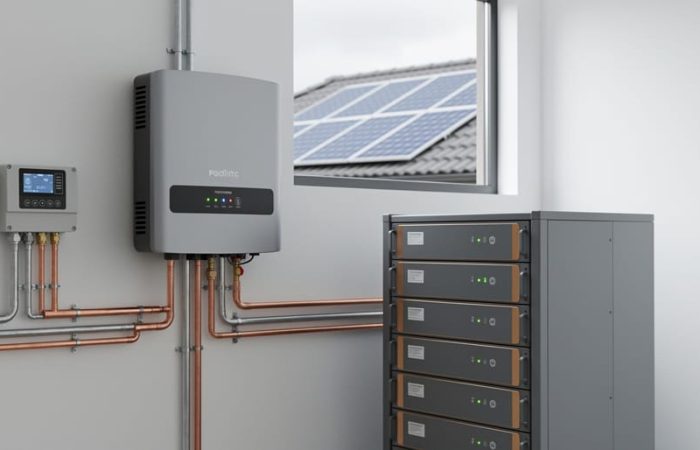
Calculate your daily energy consumption in watt-hours by reviewing your electricity bills or using a power monitor to track actual usage over several days. Multiply this figure by the number of days you want backup power (typically 1-3 days for most residential systems), then divide by your battery’s depth of discharge rating. For example, if you use 30,000 watt-hours daily and want two days of autonomy with lithium batteries rated at 80% depth of discharge, you’ll need 75,000 watt-hours (or 75 kilowatt-hours) of battery capacity.

In the interest of …

A Transition From Coal to Clean Energy

The state of Oregon has been one of the leading states in terms of sustainability. The people are very driven in their quest for a better quality of water and air. In all of the USA, the state is only the second to adopt standards on low carbon fuel. It sounds too good to be true, but yet, somehow, it is actually partially true.
It is a fact that Oregon got its energy from renewables but unsurprisingly, it comprises only a majority of the state’s energy sector. A third portion comes from the coal-fired industries, but they are not from Oregon since no coal-based facilities are allowed to operate as of 2020. Companies outside …

How Coal Country Becomes Solar Country

In Delta County of Colorado, the industries of the area had been dependent on coal-mined products. However, 5 years ago, the mining industry took a hit, and 2 of the 3 mines were closed. To fill the void, solar energy was being considered, and surprisingly, the transition went well. The lost jobs by the closure of mines were being renewed slowly as solar energy-related careers.
The transition from fossil fuel-dependent industry to renewable energy source-powered industry has been one of the underlying concerns of climate and environmental groups. Numerous large communities rely solely on mining companies. If the transition is not …

Renewables Increasingly Beat Even Cheapest Coal Competitors On Cost

A report from the International Renewable Energy Agency, or IRENA, states that renewable energy is cheaper than the usage of fossil fuels to generate electricity. In 2019, more than 50 percent of the renewables’ capacity was seen to be lower in costs compared to the cheapest, newest coal-fired power plants.
Together with the onshore wind energy systems, solar energy systems have been the major contributors to this great news. For comparison, a 1,200-Gigawatt coal capacity can cost more in terms of operation compared to a new solar PV (photovoltaic) farm. According to the estimates, replacing a 500-Gigawatt coal capacity with …